Protect Your Mind and Screen: How Online Miscommunication Happens, and How to Avoid It
Apr 21, 2026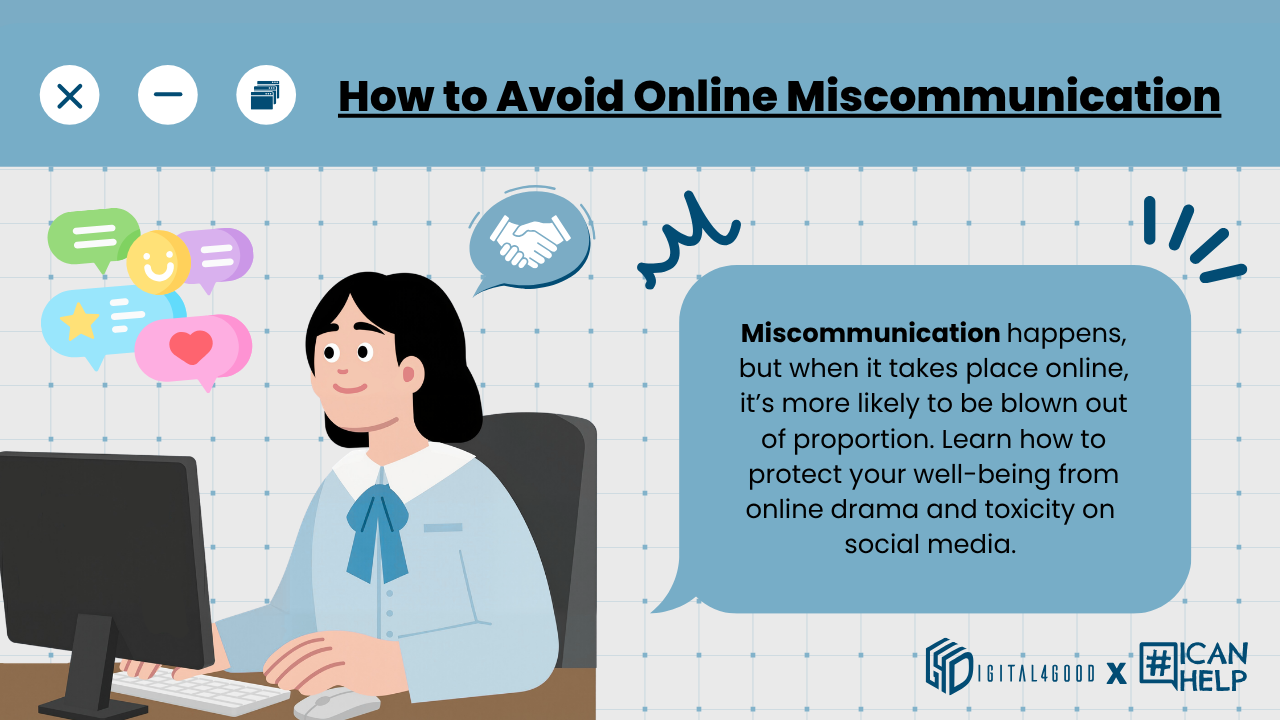
By: Kristine Edang | Seasonal Public Relations Intern | Digital4Good
From a young age, we’re taught how to practice basic good manners. But how does this show up online? How do the rules and expectations change?
Digital etiquette involves boundaries and guidelines that, when followed, are intended to promote a safe, positive environment for all users to engage with. As with in-person interactions, it’s important to be respectful of others and mindful of how our words and actions affect those around us. However, unlike with in-person conversations, we often don’t see the people we’re communicating with, which can lead to miscommunication and greater disregard for the consequences of one’s actions.
Online Miscommunication
Not all social media is the same. While popular social media platforms like Facebook and TikTok are free to use, different people gravitate toward certain apps for varying reasons. For example, while one of Facebook's primary purposes is to bring communities, families, and friends together, TikTok provides influencers and content creators with a platform to express their creativity in the form of short video content. What works on Facebook won’t always go well on TikTok.
Collectively, these differing userbases and purposes shape the way users interact with each other. Consequently, users are often pressured to follow or live up to certain expectations, frequently causing miscommunication and conflict.
Effects On Younger Users
According to the National Library of Medicine, depression, anxiety, stress, and poor quality of sleep are linked with frequent smartphone use. This is especially prevalent among Generations Z and Alpha, many of whom start using and owning digital devices from a young age.
Another report conducted by the National Library of Medicine states that excessive social media use is associated with poor mental health. Adolescents are more vulnerable to idealizing certain ways of life online, which can lead to negative self-comparisons and feelings of inadequacy. Combined with the miscommunication and toxicity that users encounter on social media apps, all of these factors can lead to emotional distress, low self-esteem, and long-term repercussions like depression and self-harm.
Your Digital Well-Being Comes First
Here are some things you can do to protect your personal well-being when it comes to social media:
- Curate your feed. Seek out content that you find uplifting and inspiring. Unfollow toxic accounts that put others down or encourage self-comparison.
- Follow the golden rule. This applies online too! Treat others how you want to be treated. Be mindful of what you post and comment on others’ posts.
- Miscommunication happens. Remember that tone is difficult to convey and interpret through a screen. Instead of jumping to conclusions, don’t be afraid to ask clarifying questions, which can go a long way in preventing unnecessary drama down the road.
- Take time for yourself. Give yourself a break from your phone! Establish personal boundaries for screen time (like not using your phone an hour before bed), and take advantage of built-in screen time limit settings on your phone.
In a technology-rich world where it’s almost impossible to be offline, it is important that we don’t neglect our physical and mental health. At Digital4Good, we’re dedicated to educating students about digital wellness, internet safety, and creating inclusive online spaces. To learn more and join the movement, visit our website at www.icanhelp.net.
Stay connected with news and updates!
Join our mailing list to receive the latest news and updates from our team.
Don't worry, your information will not be shared.
We hate SPAM. We will never sell your information, for any reason.